Institute for Women's Health (IfWH)
Institute Director

Professor
Peter Brocklehurst
Director of the Institute for Women’s Health at UCL and Co-Director of
the Department of Health Policy Research Unit in Maternal Health and
Care, University of Oxford. I spent 100% of my time on academic
activities.
More...
Gynaecological Cancer Research Centre
Lead: Professor Usha Menon
Research Overview
This Group was the starting point for the existing programme of research having been set up in the mid 1980s at The Royal London Medical School by Ian Jacobs to conduct the first large scale ovarian cancer screening trials. In 1996 following the merger of Bart’s and The Royal London it moved to Bart’s Hospital and then in 2004 to the Institute for Women’s Health at UCL. The group now consists of a multidisciplinary team of medical, nursing, scientific, laboratory and administrative staff who oversee and coordinate large multi-centre trials focused on screening and early detection of ovarian cancer and a multitude of related projects in risk stratification and early diagnosis of women’s cancer. The team are responsible for the familial gynaecological cancer service at UCH.
Aims
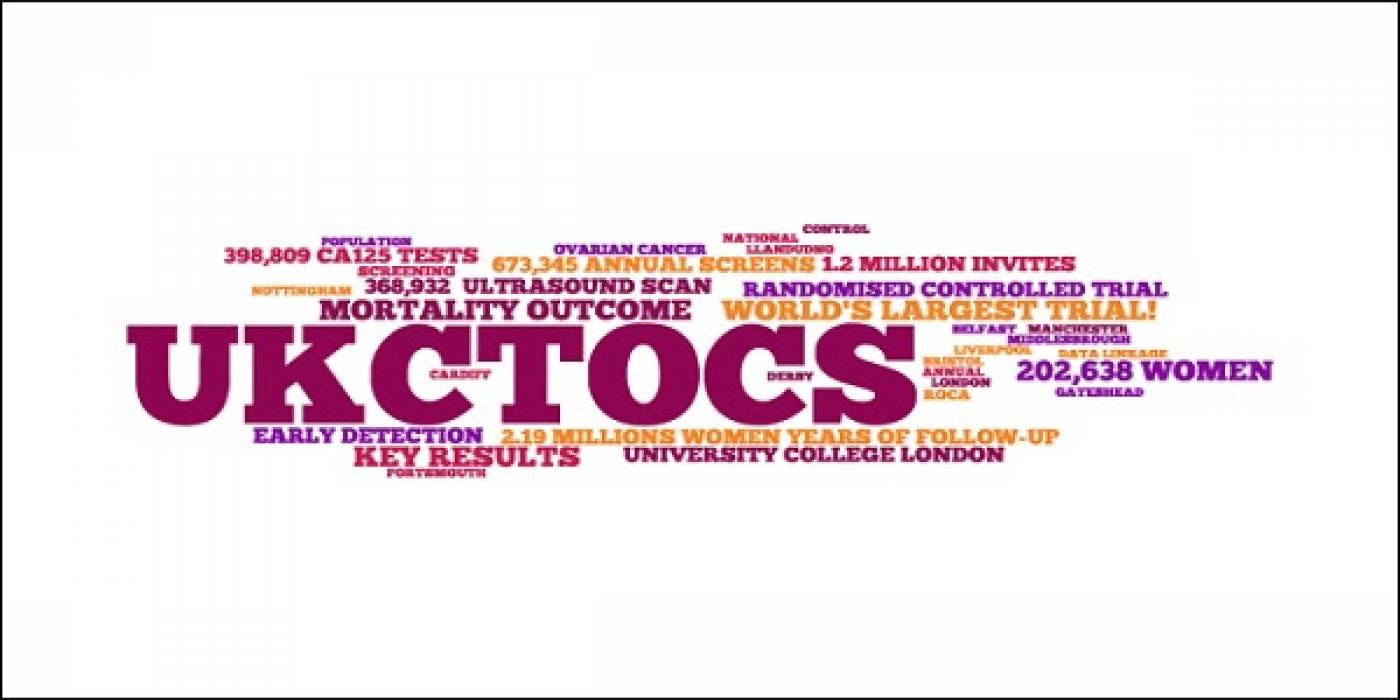
The overall aim is to reduce mortality and morbidity of women with gynaecological malignancies through screening, early diagnosis and risk prediction. In addition, the group is committed to maximising the research benefits of the large biobanks resulting from the clinical trials such as UKCTOCS. The specific objectives are:
Screening and Early Detection
- Defining the impact of ovarian cancer screening on disease specific mortality though large multi-centre randomised controlled trials in the general population (UK Collaborative Trial of Ovarian Cancer Screening UKCTOCS) and high–risk population (UK Familial Ovarian Cancer UKFOCSS)
- Optimising screening strategies for ovarian cancer both for the general and high-risk populations
- Comprehensively assessing cost, quality of life and morbidity of ovarian cancer screening in the general population
- Discovery and validation of biomarkers for early detection of women’s cancer
Improving Diagnosis
- Comparing intervals to diagnosis/pathways in ovarian cancer across five countries with a similar health care structure and exploring the root causes of differences in survival (Module Four, International Cancer Benchmarking Partnership)
- Improving time to diagnosis of ovarian cancer through better understanding of symptoms
- Developing and validating a computerised decision support tool to improve diagnosis of ovarian cancer in primary care
Risk Prediction
Contributing to the international collaborative efforts to better understand
- Genetic predisposition to ovarian cancer (Ovarian Cancer Association Consortium)
- Epidemiological risk factors in ovarian (Epi Ovarian Cancer Association Consortium), endometrial and breast cancer (Oxford Collaborative Group on Epidemiological Studies)
- Identifying epigenetic risk factors of women-specific cancers using the clinical trial cohorts
- Exploring lesser defined psychosocial influences in the development of women’s cancer
- Improving familial cancer risk prediction by exploring the role of systematic population based screening for known high-risk dominant gene mutations (using the Ashkenazi Jewish population as an initial model)
- Development and validation of risk stratification scores that incorporate genetic, epigenetic and epidemiological risk factors (PROMISE 2016)
Maximising the research benefits of the clinical trials biobanks
- Increasing the phenotypic data available in the biobanks by connecting to other national databases such as Cancer and Death registrations, Hospital Episode Statistics and Myocardial Ischaemia National Audit Project
- Putting in place processes and systems that maximise research access.
- Setting up secondary research collaborations for biomarker discovery and validation in areas outside the core remit of the group
Page last modified on 30 apr 13 21:20 by Vijay Devineni